French sculptor Vital Dubre, The god of the sea, Neptunus

French sculptor Vital Dubre, The god of the sea, Neptunus
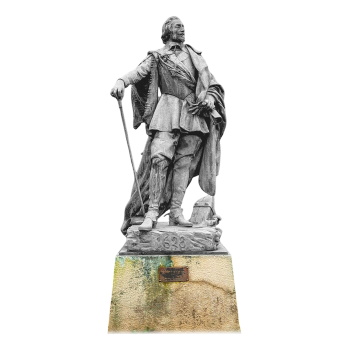
The representative work of the French sculptor Vital Dubre (Vital-Dubray) "Neptunus" was created in 1856. The work was produced by the Dussel Foundry (1823-1878) in Pocé-sur-Cisse. Neptunus: an ancient Roman god in charge of fresh water and the sea. From the time of the Punic War (264-146 BC), when the Romans demonstrated their naval superiority, Neputunus was gradually equated with the Greek god Poseidon. He is not only the god of fresh water, but also the god of the sea.
Richelieu statue in the French city of Amboise

Richelieu statue in the French city of Amboise

Richelieu (1585-1642) was a French clergyman and politician. He was also known as the 'Cardinal, 'a term derived from the honorific title given to the cardinals, 'Your Emine', and the red robes they used to wear. Richelieu was one of the most important political figures in France in the 17th century, when he became chief minister to King Louis XIII of France in 1624. During his tenure, he worked to strengthen France's centralization, weaken the aristocracy, and consolidate France's position through a series of military and foreign policies. It was created by the French artist Henri Alouar 1844-1929.
Hindu Cultural Heritage Lakshmi Statues

Hindu Cultural Heritage Lakshmi Statues

Lakshmi (Lakshmi) is the Hindu goddess of wealth, luck, beauty and prosperity. She is not only the wife of Vishnu, but also an important object of worship for Hindus. Lakshmi is often depicted as a beautiful woman sitting on a lotus flower, symbolizing purity and holiness. This model may be produced by modern three-dimensional technology, showing the artist's portrayal of this classic god image.
Indian 13th Century Sculpture Krishna Bronze Statue

Indian 13th Century Sculpture Krishna Bronze Statue

This is a bronze statue of Krishna from the southern Indian state of Tamil Nadu. This statue reflects the image of Krishna, one of the incarnations of the Hindu god Vishnu. Krishna is not only a deeply worshipped god in Hinduism, but also an important role in the epic Mahabharata. This sculpture has been identified as a cultural relic from the 13th to 14th centuries and is currently preserved in the Museum of World Cultures and Peoples in Barcelona, Spain. It is not only a symbol of Indian culture, but also an important heritage of cross-cultural communication.
Nepal Heritage Indra Square Brass Stone Lion

Nepal Heritage Indra Square Brass Stone Lion

This pair of brass sculptures is located at the gate of the "Akash Bhairav" temple in Indra Square, Kathmandu. Indrachowk is an ancient market square, historically a place where merchants traveling to and from India and Tibet often passed. This square is named after Indra, the Lord of Heaven in Hindu mythology. Today, the temples and markets here still attract a large number of pilgrims and shoppers.
South Indian Religious Cultural Heritage Sumerskanda Statue

South Indian Religious Cultural Heritage Sumerskanda Statue

A statue of Sumo Scanda (Somaskanda), dated from about the 14th to 15th centuries AD. "Sumoskanda" is a religious scene in Hindu mythology that depicts the image of Shiva (Shiva) together with the goddess Parvati (Parvati) and their child Skanda (also known as Murugan Murugan). This scene usually symbolizes the harmony and divine strength of the family. In such statues, Shiva and Parvati sit in the center, showing majesty and solemnity, while Skanda stands in the center or near between the two as their children.
Dan Bi Stone-Panlong Sculpture

Dan Bi Stone-Panlong Sculpture

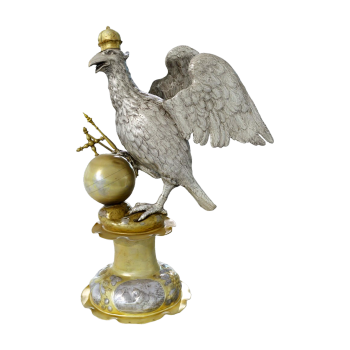
Polish Eagle Ware

Polish Eagle Ware

This vessel is displayed in the National Art Collection at Wawel Royal Castle. Designed in the shape of a Polish eagle, it showcases Poland's national symbol and artistic style. Wawel Royal Castle is one of the most important historical and cultural sites in Poland, with a large collection of precious works of art and historical artifacts.
Eighteenth-century sculpture of Santa Anna

Eighteenth-century sculpture of Santa Anna

This sculpture was created in the 18th century and is on display at the Katia Lexander Klosinski Museum. The sculpture depicts the image of Santa Anna, the mother of the Virgin Mary and an important figure in the Christian tradition. The sculpture is carved using wood in the style of the Baroque period, showing the artistic style and craftsmanship of the time.
16th century wood carving of Santa Ana

16th century wood carving of Santa Ana

This sculpture was created in the 16th century and is on display at the Biyates Land Museum. The sculpture depicts the image of Santa Anna, the mother of the Virgin Mary and an important figure in the Christian tradition. The sculpture is carved using wood in the Renaissance style, showing the artistic style and craftsmanship of the time.
Bust of Josef Poniatowski

Bust of Josef Poniatowski

The sculpture was created by Polish sculptor Jakub Tartarkiewicz and is on display at the Krakow National Museum. The sculpture depicts a portrait of renowned Polish military leader Josef Poniatowski. Poniatowski was an important figure in Polish history who fought for Poland's independence and freedom during the Napoleonic Wars.
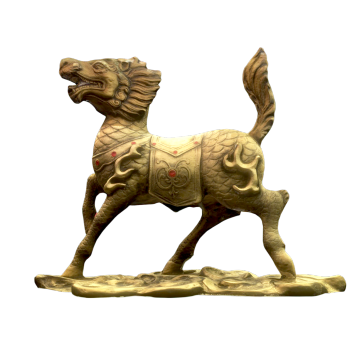
Kirin Statue in Qing Dynasty

Kirin Statue in Qing Dynasty

Crane relief in the forest

Crane relief in the forest

South China Sea Guanyin Stone Carvings

South China Sea Guanyin Stone Carvings

Stone Vase Decoration

Stone Vase Decoration

Woman and dragon exquisite wood carving

Woman and dragon exquisite wood carving

Migvie Kirk Monument in Aberdeenshire

Migvie Kirk Monument in Aberdeenshire

Migvie Kirk is located on a small road northwest of Tarland in Aberdeenshire. This irregularly shaped stone is made of gneiss and is 2.1 meters high. The front of the stone faces east, away from the gate you just walked through. The front is mostly occupied by carved crosses and decorative patterns. The outline of the cross is unusual, with four arms intersecting at the center. The upper corner is carved into the shape of a metal ring, as if this cross is a pendant depiction. Appropriate lighting and a little imagination are needed to see clearly, but there are other carvings on the area left by the angle of the cross.
Munich Copper City Model

Munich Copper City Model

Moche Culture Human Image Sculpture

Moche Culture Human Image Sculpture

Human image sculptures with Moche cultural characteristics, which existed between 200 BC and 600 AD. The Moche culture is an ancient civilization in the coastal region of northern Peru in South America, known for its exquisite metalworking, pottery, and sculpture. This sculpture is an important work of art in the Moche culture, showcasing the society's portrayal of character images and aesthetic concepts at that time. In 2021, this sculpture was returned from Canada. The return of the sculpture represents respect and protection for cultural heritage, and also reflects the international community's emphasis on illegal cultural relic trade and cultural heritage protection.
Human sculpture artwork

Human sculpture artwork

It is a type of humanoid sculpture artwork created between approximately 1000 and 1470. It usually has unique cultural characteristics and artistic styles, reflecting the social beliefs, religious rituals, and aesthetic concepts of the time. During this period, many civilizations made significant achievements in artistic creation, with sculpture art particularly developed. It was not only more mature in technology, but also more rich and delicate in artistic expression. Successfully recovered from the Netherlands in 2022. This is not only a protection of cultural heritage, but also a respect for history and culture.
Lednica Castle Garden Zeus Statue

Lednica Castle Garden Zeus Statue

The 17th century Zeus statue located in Lednice Castle Garden. Zeus is the highest god in Greek mythology, in charge of the sky and thunder, and is the leader of the Olympian gods. The history of the gardens of Ledernitz Castle can be traced back to the 12th century, initially as a fortress used to defend against foreign crossing of rivers. Later, it became the private property of the Liechtenstein family and was transformed into a magnificent courtyard between the 17th and 20th centuries.
Chinese Loong Sculpture in Tianhou Palace
Chinese Loong Sculpture in Tianhou Palace

Tianhou Temple is located in Shekou District, Shenzhen, Guangdong Province, China. It is a long-standing Taoist temple that enshrines the sea goddess Mazu. In the courtyard, there is a striking dragon sculpture. This dragon is presented in the image of a traditional Chinese Loong, beautifully carved and rich in details. The dragon's body winds and spirals, its scales are clearly visible, and its claws are strong and powerful, showcasing the majesty and mystery of the dragon. The dragon's head lifted high, its eyes shining brightly, as if guarding this temple and the people who came to worship. Not only is it a display of art, but it also contains profound cultural significance. In traditional Chinese culture, the dragon is a symbol of auspiciousness, representing strength, wisdom, and good luck.
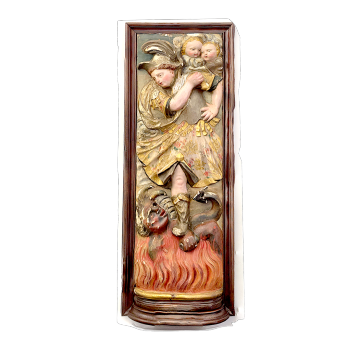
Miguel's Arrival

Miguel's Arrival

Miguel is an archangel in religious doctrine, appearing in Judaism, Christianity, and Islam. The Catholic Church, Anglican Church, Eastern Orthodox Church, and Lutheran Church all refer to him as Archangel Miguel or simply Miguel. In Hebrew, Miguel means' the person who is like God '(Mi -' who ', kha -' like ', El -' God '), which is usually interpreted as a rhetorical question:' Who is like God? 'The expected answer is negative, meaning that no one is like God. Therefore, Miguel was reinterpreted as a symbol of humility towards God
Indian Warrior Stele

Indian Warrior Stele

The Museu de Arqueologia in Lisbon, Portugal, houses a work called the Estela De Guerreiro Hindu, which was made in the 10th to 13th and 16th centuries. The back of this artwork is carved with warriors from the Sousa family. The museum is the most important archaeological museum in Portugal, located in Lisbon and founded by Jos é Leite de Vasconcelos in 1893.